Most crypto investors believe success comes from gut instinct or lucky timing. The truth is far different. Analytics transforms cryptocurrency investing from emotional guesswork into a disciplined, data-driven practice that works for beginners and veterans alike. This guide reveals how analytics tools and techniques empower you to make smarter decisions, optimize portfolio performance, and enhance trading strategies. Whether you’re managing your first Bitcoin purchase or rebalancing a diverse crypto portfolio, understanding analytics gives you a measurable edge in volatile markets.
Table of Contents
- Key takeaways
- Why analytics matter in crypto investing
- Popular analytics methods and tools in crypto
- How analytics optimize crypto portfolio management
- Integrating automated analytics for smarter crypto trading
- Explore CryptoCracker’s analytics solutions
- Frequently asked questions
Key Takeaways
| Point | Details |
|---|---|
| Emotional bias reduction | Analytics replaces guesswork with data driven metrics to help investors avoid emotional reactions. |
| Forecasting and risk management | Descriptive, predictive, and prescriptive analytics help forecast movements and manage risk through quantified insights. |
| Improves trading precision | Automated analytics refine entry and exit timing by aligning signals with objective indicators. |
| Portfolio optimization with analytics | Analytics support position sizing, diversification, and rebalancing based on volatility and correlations. |
| Start with one analytics method | Begin with a single analytics approach that fits your style to avoid analysis overload. |
Why analytics matter in crypto investing
Cryptocurrency markets operate 24/7 with price swings that can exceed 20% in a single day. This extreme volatility creates opportunities but also exposes investors to significant risk. Relying purely on intuition or social media hype often leads to buying high during euphoria and selling low during panic. Analytics provides the objective framework you need to navigate these turbulent waters.
Three main categories of analytics serve crypto investors. Descriptive analytics examines historical price patterns and trading volumes to identify what happened. Predictive analytics uses statistical models and machine learning to forecast potential future movements. Prescriptive analytics goes further by recommending specific actions based on your goals and risk tolerance. Each type processes massive datasets far faster than any human could manually analyze.
The practical benefits show up in real trading scenarios. Analytics reduces guesswork and emotional bias in crypto trading by replacing fear and greed with quantifiable metrics. Instead of wondering whether Bitcoin’s recent dip signals a buying opportunity or further decline, you can examine support levels, volume trends, and momentum indicators. This systematic approach helps you time entries and exits more effectively.
Risk awareness improves dramatically when you apply analytics. You’ll understand position sizing based on volatility metrics rather than arbitrary percentages. You’ll spot correlation patterns between different cryptocurrencies to avoid overexposure to similar assets. You’ll recognize when market conditions favor holding versus active trading.
Pro Tip: Start with one analytics method that matches your trading style. Day traders benefit most from technical indicators, while long-term holders should focus on on-chain metrics that reveal network fundamentals and adoption trends.
Analytics tools range from free charting platforms to sophisticated paid services. The key is selecting tools that present data clearly without overwhelming you. Clean visualizations transform complex information into actionable insights. When you can quickly interpret a chart or dashboard, you make faster decisions with greater confidence.
Popular analytics methods and tools in crypto
Technical analysis dominates short-term crypto trading strategies. This method studies price charts and trading volume to identify patterns that suggest future movements. Common indicators include moving averages that smooth price data, relative strength index (RSI) that measures momentum, and Bollinger Bands that show volatility ranges. Traders combine multiple indicators to confirm signals before executing trades.

On-chain analytics examines blockchain data directly. Unlike price charts that only show market activity, on-chain metrics reveal what’s happening at the protocol level. You can track active addresses to gauge network usage, analyze exchange inflows to predict selling pressure, or monitor whale wallets to spot large holder movements. Technical indicators, on-chain data, and sentiment analysis are key analytics methods for crypto markets because each provides unique insights the others miss.
Sentiment analysis quantifies market mood by scanning social media posts, news articles, and forum discussions. Natural language processing algorithms identify whether conversation trends positive, negative, or neutral. Extreme sentiment readings often signal turning points. When everyone feels euphoric, markets may be topping. When fear dominates, buying opportunities may emerge.
| Method | Data sources | Best for | Limitations |
|---|---|---|---|
| Technical analysis | Price charts, volume | Short-term trading, entry/exit timing | Ignores fundamental factors |
| On-chain metrics | Blockchain data, network stats | Long-term investing, protocol health | Delayed signals, complex interpretation |
| Sentiment analysis | Social media, news, forums | Contrarian strategies, market mood | Noise from bots, manipulation risk |
Combining methods creates more robust strategies. A technical buy signal gains strength when on-chain metrics show accumulation by long-term holders and sentiment remains cautiously optimistic rather than euphoric. Conversely, a technical breakout loses credibility if on-chain data reveals heavy exchange deposits and sentiment hits extreme greed levels.
Your choice of tools depends on your investment timeline and technical comfort level. Beginners often start with simple moving average crossovers and gradually add complexity. Experienced traders might run custom scripts that pull API data from multiple sources. The most effective approach matches tool sophistication to your ability to interpret and act on the information.
Pro Tip: Focus on 3 to 5 core metrics rather than tracking dozens. Information overload leads to analysis paralysis. Master a small set of reliable indicators that complement your strategy before expanding your analytics toolkit.
How analytics optimize crypto portfolio management
Portfolio construction becomes systematic when you apply analytics to asset selection and allocation. Instead of buying whatever cryptocurrency is trending on social media, you can evaluate potential holdings using quantitative criteria. Market capitalization, liquidity depth, historical volatility, and correlation with other assets all factor into smart allocation decisions. Analytics tools help optimize portfolios by assessing risk and performance systematically rather than relying on hunches.
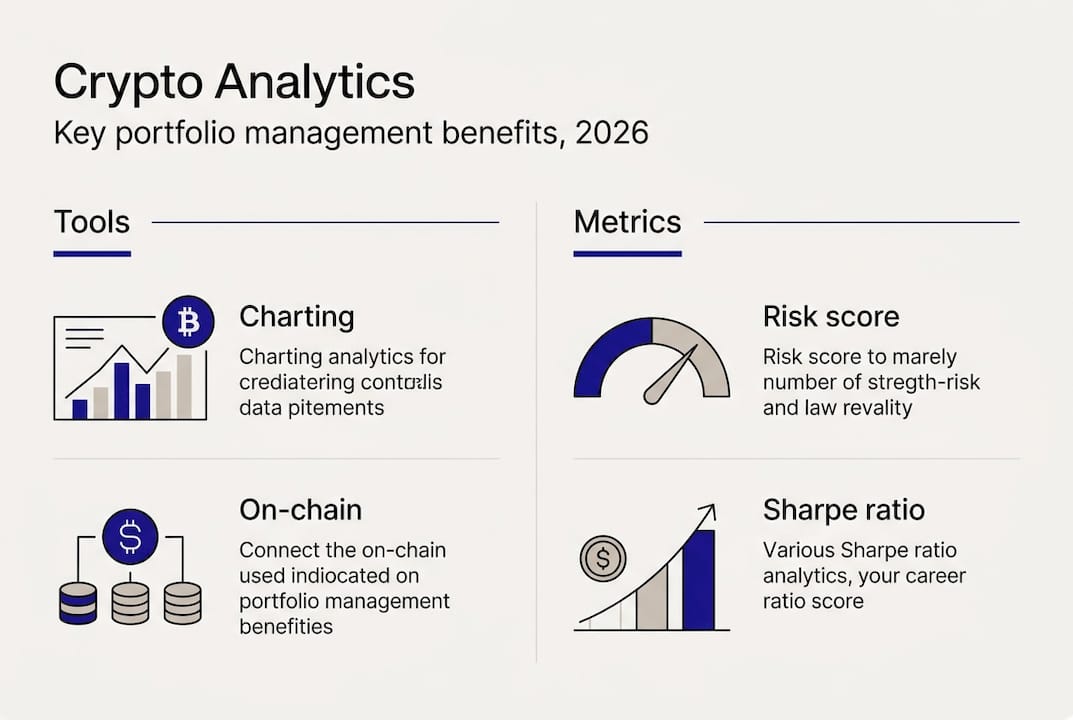
Risk management separates successful long-term investors from those who blow up their accounts. Analytics quantifies your exposure through several key metrics. Value at Risk (VaR) estimates potential losses over a specific timeframe with a given confidence level. Maximum drawdown shows the largest peak-to-trough decline you’ve experienced. Beta measures how much your portfolio moves relative to the broader crypto market. These numbers help you right-size positions and set appropriate stop-loss levels.
Performance tracking reveals what’s working and what needs adjustment. Simply knowing your total return isn’t enough. You need to understand risk-adjusted returns that account for volatility you endured to achieve those gains. The Sharpe ratio divides excess return by standard deviation, showing how much return you earned per unit of risk. A higher Sharpe ratio indicates more efficient performance.
| Metric | What it measures | How to use it |
|---|---|---|
| Sharpe ratio | Risk-adjusted return | Compare strategies, aim for values above 1.0 |
| Maximum drawdown | Largest peak-to-trough loss | Set position sizes to keep drawdowns tolerable |
| Volatility (standard deviation) | Price fluctuation magnitude | Adjust allocation based on risk capacity |
| Correlation coefficient | How assets move together | Diversify with low-correlation holdings |
| Alpha | Excess return vs. benchmark | Evaluate if active management adds value |
Rebalancing maintains your target allocation as prices fluctuate. Without analytics, you might rebalance on arbitrary schedules or not at all. Data-driven approaches trigger rebalancing when allocations drift beyond predetermined thresholds. If Bitcoin grows from 40% to 50% of your portfolio, analytics tools alert you to trim the position and redeploy proceeds into underweighted assets.
Automated monitoring eliminates the need for constant manual checking. You can set alerts for specific conditions like price levels, volatility spikes, or correlation changes. This frees your time while ensuring you never miss important portfolio developments. When an alert triggers, you review the situation and decide whether action is warranted.
Pro Tip: Review portfolio analytics weekly but avoid making changes based on short-term noise. Set a minimum threshold for rebalancing, such as 5% allocation drift, to prevent overtrading and unnecessary transaction costs.
Integrating automated analytics for smarter crypto trading
Automation takes analytics to the next level by executing trades based on predefined rules without human intervention. Algorithmic trading systems monitor markets continuously, identify opportunities matching your criteria, and place orders instantly. This speed advantage matters in crypto markets where prices can gap significantly in seconds. Automated crypto analytics improve speed, accuracy, and consistency in trading decisions by eliminating the delays inherent in manual processes.
Emotional discipline becomes automatic when algorithms handle execution. Fear and greed no longer influence your decisions because the system follows its programmed logic regardless of market sentiment. You might hesitate to buy during a sharp selloff even when your strategy signals opportunity. An automated system executes without hesitation, capturing the dip exactly as planned.
Implementing automated analytics follows a systematic process:
- Define your strategy parameters including entry signals, exit rules, position sizing, and risk limits
- Configure analytics tools to monitor relevant data streams and calculate your chosen indicators
- Backtest the strategy against historical data to verify it would have performed acceptably
- Enable automated execution in a paper trading environment to confirm the system works correctly
- Deploy with real capital starting at small position sizes
- Monitor performance metrics and adjust parameters based on results
The technology behind automation ranges from simple to sophisticated. Basic systems might execute trades when price crosses a moving average. Advanced implementations use machine learning models that adapt to changing market conditions. Neural networks can identify complex patterns humans might miss. Regardless of complexity, the core benefit remains consistent execution of your chosen strategy.
Studies show automated trading systems achieve 15% to 30% better risk-adjusted returns than discretionary trading by maintaining discipline during volatile periods and capturing opportunities 24/7 without fatigue.
Human oversight remains essential even with full automation. You should review system performance regularly to ensure it’s operating as intended. Market conditions change over time, and strategies that worked well historically may need adjustment. Set maximum loss limits that pause trading if drawdowns exceed acceptable levels. Think of automation as a tireless assistant that handles routine execution while you focus on strategic decisions.
Integration with portfolio management creates a comprehensive system. Your automated trading strategy feeds data back into portfolio analytics, showing how individual trades contribute to overall performance. You can compare automated versus manual trades to quantify the automation benefit. This feedback loop drives continuous improvement in both your strategy and execution.
Explore CryptoCracker’s analytics solutions
After understanding how analytics transforms crypto investing, you’re ready to apply these concepts with professional-grade tools. CryptoCracker delivers comprehensive analytics designed specifically for cryptocurrency investors who want data-driven portfolio management without overwhelming complexity. The platform combines market trend analysis, portfolio optimization, and automated trading capabilities in one integrated solution.

You’ll access real-time analytics dashboards that visualize key metrics clearly, making complex data immediately actionable. Performance indicators track your returns, risk exposure, and portfolio health automatically. The platform integrates with Coinbase via secure API connections, enabling seamless data flow and trade execution. Whether you’re a beginner learning to interpret analytics or an experienced investor seeking automation, CryptoCracker provides the tools you need to optimize your crypto investment strategy.
Frequently asked questions
What is the role of analytics in cryptocurrency investing?
Analytics provides objective, data-driven insights that replace emotional decision-making with systematic strategies. It helps investors identify trends, manage risk, optimize portfolios, and time trades more effectively across volatile crypto markets.
Can beginners use crypto analytics effectively?
Yes, modern analytics platforms present complex data through intuitive visualizations that anyone can interpret. Start with basic metrics like moving averages and gradually expand to more sophisticated indicators as your understanding grows.
How does automated analytics improve trading results?
Automation executes trades instantly based on predefined criteria, eliminating emotional hesitation and capturing opportunities 24/7. Systems maintain discipline during volatile periods and respond faster than manual trading, typically improving risk-adjusted returns by 15% to 30%.
What’s the difference between technical and on-chain analytics?
Technical analysis studies price charts and trading volume patterns for short-term signals. On-chain analytics examines blockchain data like network activity and holder behavior for insights into long-term fundamentals and adoption trends.
How often should I review my crypto portfolio analytics?
Check portfolio metrics weekly to monitor performance and risk exposure, but avoid making changes based on daily noise. Set specific thresholds for rebalancing, such as 5% allocation drift, to prevent overtrading while maintaining your target strategy.