TL;DR:
- Secure crypto investing emphasizes self-custody with hardware wallets and layered security practices.
- Moving assets to cold storage and minimizing exchange holdings reduce hacking and counterparty risks.
- Consistent habits, regular updates, and cautious management are vital for long-term portfolio protection.
Most investors spend hours researching which coins to buy and almost no time thinking about how to protect what they’ve already earned. That’s a costly gap. Self-custody and hardware wallets are the foundation of secure crypto investing, yet a surprising number of people leave significant holdings on exchanges, one hack away from zero. This guide walks you through exactly what secure crypto investing means, which tools actually work, and the layered strategies that separate resilient portfolios from vulnerable ones. Whether you’re just starting out or have been in the space for years, there’s something here worth reviewing.
Table of Contents
- What does secure crypto investing really mean?
- Essential tools: Hardware wallets and secure platforms
- Building a secure portfolio: Layered strategies and best practices
- Common risks and how to avoid them
- Where most investors get security wrong (and what to do instead)
- Secure your crypto journey with the right tools
- Frequently asked questions
Key Takeaways
| Point | Details |
|---|---|
| Self-custody matters | Storing your crypto in hardware wallets puts you in control and minimizes external risks. |
| Choose proven tools | Top-rated hardware wallets and secure platforms make self-custody manageable for all experience levels. |
| Layer your defenses | Combining cold storage, hot wallets, and hybrid strategies protects against both hacks and mistakes. |
| Stay vigilant | Regularly update devices, verify transfers, and backup recovery phrases to avoid costly errors. |
What does secure crypto investing really mean?
Security in crypto isn’t a single action. It’s a framework, a set of habits and tools that work together to protect your assets at every stage. Most people think “secure” means using a strong password or enabling two-factor authentication. Those things matter, but they’re just the entry point.
At its core, secure crypto investing prioritizes self-custody, which means you control your private keys rather than trusting a third party to hold them for you. When you leave crypto on an exchange, you don’t technically own it. The exchange does. You have a claim. That distinction matters enormously when things go wrong.
Here are the core principles to understand:
- Self-custody: You hold your own private keys using a personal wallet, not an exchange account.
- Cold storage: The majority of your holdings live offline, on a hardware wallet or paper wallet, completely disconnected from the internet.
- Hot wallets: Software wallets connected to the internet are useful for small, frequent transactions but should never hold large balances.
- Layered security: No single tool is enough. Combine hardware wallets, strong passwords, two-factor authentication, and phishing awareness.
- Scam prevention: Phishing emails, fake apps, and social engineering are the leading causes of crypto loss, not technical failures.
“The most common mistake isn’t choosing the wrong coin. It’s trusting the wrong custodian.”
Understanding cryptocurrency wallet basics is the first step toward real security. Exchanges are convenient for buying and trading, but they carry counterparty risk. If an exchange is hacked, freezes withdrawals, or goes bankrupt, your funds can disappear with little recourse. The secure wallet transfer importance cannot be overstated: moving assets to a wallet you control is one of the highest-impact security moves you can make.
Think of it this way. Keeping crypto on an exchange is like leaving cash in someone else’s safe. Convenient, yes. But it’s their safe, not yours.
Essential tools: Hardware wallets and secure platforms
With the basics established, it’s time to choose the right tools to enforce your security plan. Hardware wallets are the gold standard for long-term storage, and the market offers several strong options with different strengths.
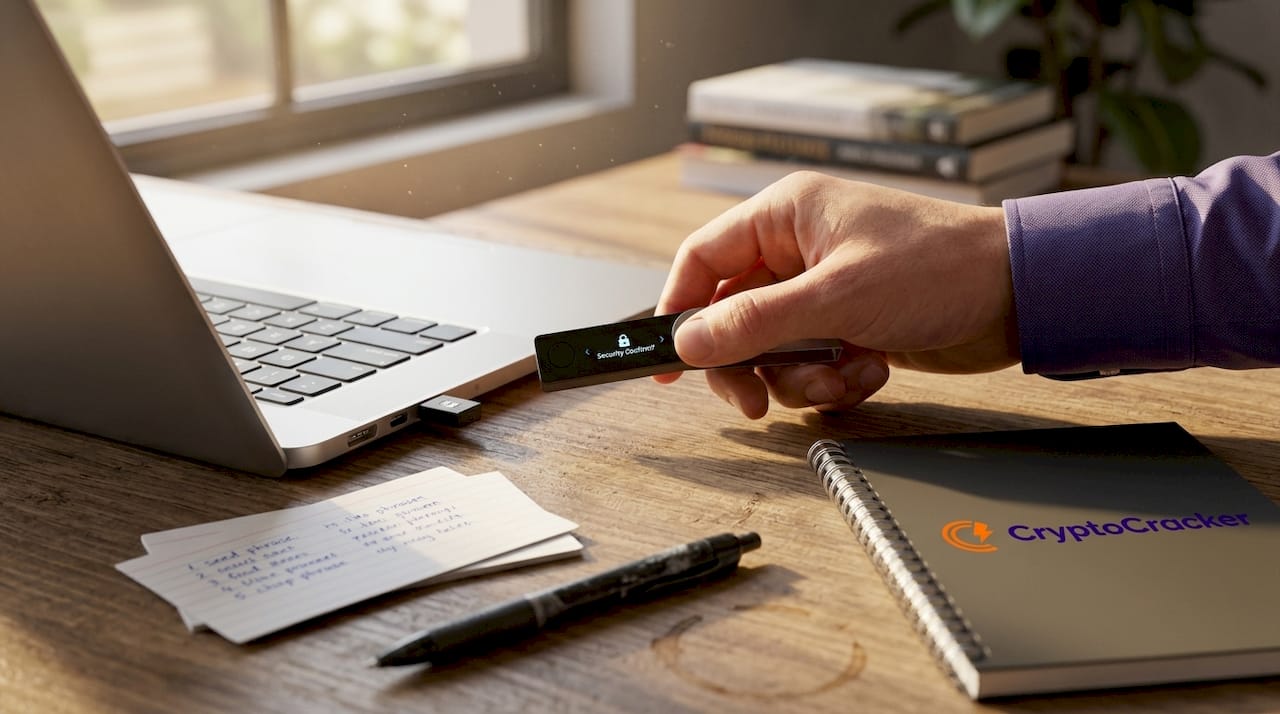
Top hardware wallets like the Trezor Safe 3, Trezor Safe 5, Ledger Nano X, and NGRAVE ZERO carry EAL ratings from EAL5+ to EAL7, which measure resistance to physical and software attacks. Higher EAL ratings mean more rigorous independent testing and greater confidence that your device can withstand sophisticated threats.
| Wallet | EAL Rating | Open Source | Air-Gap | Best For |
|---|---|---|---|---|
| Trezor Safe 3 | EAL6+ | Yes | No | Beginners, value |
| Trezor Safe 5 | EAL6+ | Yes | No | Ease of use |
| Ledger Nano X | EAL5+ | Partial | No | Broad coin support |
| NGRAVE ZERO | EAL7 | Partial | Yes | Maximum security |
Air-gap capability means the device never connects to the internet at all, not even via USB during signing. That’s the highest level of isolation available. For most investors, a Trezor or Ledger is more than sufficient. For those holding very large amounts, the NGRAVE ZERO’s EAL7 rating and air-gap design are worth the premium.
Beyond the device itself, both Ledger Live and Trezor Suite offer portfolio management features within a secure environment. You can check balances, manage assets, and initiate transactions without exposing your private keys to a browser or third-party app. That’s a meaningful advantage over managing everything through an exchange interface.
When choosing between crypto wallet types, consider three factors: how often you need access, how much you’re storing, and your comfort with technical setup. For creating a safe wallet, the process is simpler than most people expect, and the one-time setup effort pays dividends for years.
Pro Tip: Always buy hardware wallets directly from the manufacturer’s official website. Third-party resellers, even on major marketplaces, have been known to sell tampered devices.
Backup options matter too. Every hardware wallet generates a seed phrase, typically 12 or 24 words, that can restore your wallet if the device is lost or damaged. Store this phrase on metal, not paper, and keep it in a separate physical location from the device itself.
Building a secure portfolio: Layered strategies and best practices
Once you’ve selected your tools, let’s look at how to deploy them in practice to create layered, resilient portfolio security.
The most practical framework is the hybrid model. Most security experts recommend keeping 90% of holdings in cold storage and only 5 to 10% on reputable exchanges for active trading or liquidity needs. This approach balances security with accessibility without sacrificing either.
Here’s a step-by-step approach to setting up your security layers:
- Move the majority to cold storage. Transfer long-term holdings to your hardware wallet as soon as possible after purchase.
- Keep a small trading balance on exchange. Only what you need for near-term activity should stay on an exchange.
- Use a dedicated hot wallet for DeFi. If you interact with decentralized applications, use a separate software wallet. Never connect your main cold storage wallet to DeFi protocols.
- Enable all available security on exchanges. Two-factor authentication via an authenticator app (not SMS), withdrawal whitelists, and anti-phishing codes where available.
- Update firmware regularly. Hardware wallet manufacturers release security patches. Staying current closes known vulnerabilities.
- Test before you trust. Always send a small test transaction when using a new address or wallet for the first time.
| Approach | Security Level | Liquidity | Best For |
|---|---|---|---|
| 100% on exchange | Low | High | Short-term traders only |
| Hybrid (90/10 split) | High | Moderate | Most investors |
| 100% cold storage | Very High | Low | Long-term holders |
| Multi-sig cold storage | Maximum | Low | Large portfolios |
Multi-signature wallets add another layer by requiring multiple approvals before any transaction is authorized. Think of it like a joint bank account where two out of three keyholders must sign off. For portfolios above a certain threshold, this is worth considering. For security in crypto investing, the layered approach is far more effective than any single tool alone.
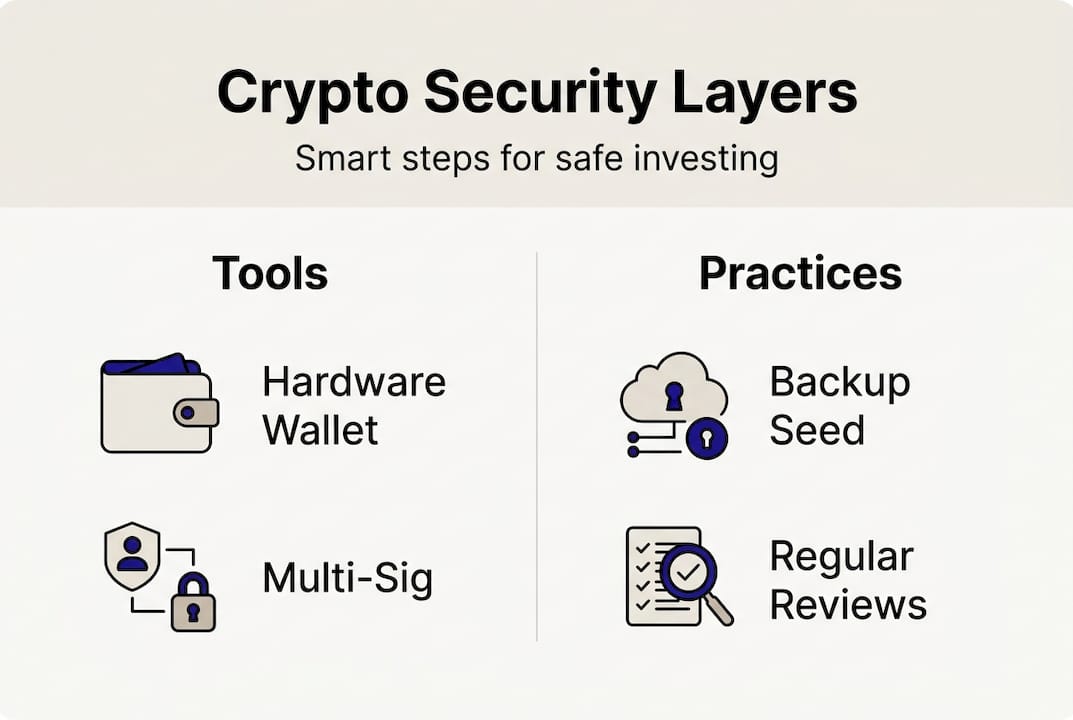
Review crypto security best practices regularly, because the threat landscape evolves. What was sufficient in 2023 may not be enough today. Combining hardware tools with strong operational habits is what the most resilient investors do, as outlined in expert crypto strategies.
Pro Tip: Never store your seed phrase digitally. No photos, no cloud documents, no password managers. Physical, offline, and ideally in two separate secure locations.
Common risks and how to avoid them
Even with solid practices, there are critical risks that trip up even seasoned investors. Here’s how to stay one step ahead.
The risks fall into three broad categories: user error, exchange risk, and external scams. Each requires a different mitigation strategy.
User mistakes are the most common cause of permanent loss:
- Losing or destroying a seed phrase with no backup
- Sending crypto to the wrong address (transactions are irreversible)
- Device loss or damage without a recovery plan
- Using weak or reused passwords on exchange accounts
Exchange risk is structural. Self-custody eliminates counterparty risk, but exchanges can be hacked, frozen by regulators, or go bankrupt, leaving users with limited or no access to funds. This isn’t theoretical. Major exchange failures have wiped out billions in investor holdings over the past few years.
Scams and social engineering are growing in sophistication:
- Phishing emails that mimic exchange or wallet communications
- Fake apps in official app stores that steal credentials
- Social media impersonators offering fake giveaways or investment opportunities
- “Support” scams where attackers pose as customer service agents
Exchange hacks and exploits cost investors over $2 billion in 2024 and 2025 combined, underscoring why keeping funds off exchanges is more than just good advice.
The crypto security best practices that actually prevent these losses are straightforward: verify every URL before entering credentials, never share your seed phrase with anyone for any reason, and treat unsolicited investment advice with extreme skepticism. The crypto space rewards the careful and punishes the careless.
Where most investors get security wrong (and what to do instead)
Here’s something most guides won’t tell you: the investors who get hurt most often aren’t the ones who know nothing about security. They’re the ones who know just enough to feel confident but haven’t built consistent habits.
Complacency is the real threat. Someone sets up a hardware wallet, feels secure, and then stops reviewing their setup. Firmware goes unupdated. Seed phrase backups get stored carelessly. Exchange balances creep back up because it’s convenient. Only invest what you can afford to lose, and treat your security setup with the same discipline.
We’ve seen this pattern repeatedly. New investors chase advanced tools, multi-sig setups, air-gapped devices, before they’ve mastered the basics. Starting simple is genuinely better. A well-used basic hardware wallet beats a poorly managed advanced one every time.
Operational security matters more than most people realize. Your token choices, your portfolio allocation, even your exchange selection matters far less than whether you consistently follow your own security rules. The secure wallet transfer habit alone, moving assets off exchanges promptly, would prevent the majority of losses we see.
Schedule a quarterly security review. Check firmware versions, verify backup locations, audit exchange balances, and review which apps have wallet access. Fifteen minutes every three months is all it takes to stay ahead of most threats.
Secure your crypto journey with the right tools
You now have a clear picture of what secure crypto investing actually requires. The next step is putting it into practice without spending hours managing it manually.

CryptoCracker is built for exactly this. Our platform connects to your Coinbase account via secure API keys, giving you real-time portfolio visibility, automated analysis, and personalized recommendations, all without exposing your private keys. Explore our guide to crypto wallets to deepen your understanding, use our tools to optimize your crypto portfolio with data-driven insights, and leverage our crypto market analysis tools to make informed decisions with confidence. Security and smart investing don’t have to be complicated.
Frequently asked questions
What is the safest way to store large amounts of cryptocurrency?
For large holdings, hardware wallets with self-custody and offline storage are the safest option, combined with secure, physically separate seed phrase backups to ensure recovery if the device is lost.
Should I keep any crypto on an exchange?
A small trading balance on a reputable exchange is practical for active traders, but the bulk of your holdings should be self-custodied in cold storage to eliminate counterparty risk.
What are common mistakes that put crypto investors at risk?
Not backing up seed phrases, falling for phishing attacks, and using unsecured or shared devices for wallet access are among the most frequent and costly mistakes investors make.
How do hardware wallet security levels (EAL ratings) matter?
Higher EAL ratings like EAL7 indicate the device has passed more rigorous independent testing, offering stronger resistance to both physical tampering and software-based attacks compared to lower-rated alternatives.