Many Irish investors believe holding cryptocurrency avoids tax obligations or that any reputable exchange guarantees security. Both assumptions are dangerously wrong. Every crypto transaction triggers potential tax liabilities under Irish law, and exchange hacks cost investors millions annually. Effective crypto management in 2026 requires selecting secure exchanges and wallets, understanding capital gains and income tax rules, and using specialized tools to simplify compliance. This guide equips Irish investors with actionable strategies for safe portfolio management, regulatory compliance, and tax optimization.
Table of Contents
- Choosing The Right Cryptocurrency Exchanges In Ireland
- Essential Crypto Wallets For Irish Investors
- Understanding Crypto Taxation In Ireland: What Investors Must Know
- Leveraging Crypto Tax Software And Professional Services
- Explore CryptoCracker’s Tools For Smarter Crypto Management
- Frequently Asked Questions
Key takeaways
| Point | Details |
|---|---|
| Exchange selection matters | Choose platforms with strong regulatory compliance, transparent fees, and robust security features to protect your investments. |
| Tax obligations are unavoidable | All crypto disposals face 33% CGT above €1,270 annual exemption, plus income tax on rewards. |
| Wallet security is critical | Cold wallets like hardware devices offer superior protection for long-term holdings compared to online alternatives. |
| Deadlines are strict | Form 11 and CG1 returns due October 31, CGT payments due January 31 for prior year disposals. |
| Automation simplifies compliance | Tax software and portfolio tools reduce errors and optimize investment decisions for Irish investors. |
Choosing the right cryptocurrency exchanges in Ireland
Selecting the right exchange is your first defense against fraud, regulatory penalties, and unnecessary costs. Irish investors must prioritize platforms that comply with EU Anti-Money Laundering regulations and Revenue tracking requirements. Non-compliant exchanges expose you to legal risks and potential account freezes. Beyond compliance, evaluate trading fees, security infrastructure, asset variety, and platform usability to match your investment strategy.
Reputable exchanges implement Know Your Customer protocols, requiring identity verification before trading. While this adds friction, it protects you from illicit activity associations and ensures Revenue can track transactions. Security measures like two-factor authentication, cold storage for user funds, and insurance coverage against hacks separate professional platforms from risky alternatives. Asset variety matters if you plan to diversify beyond Bitcoin and Ethereum, while intuitive interfaces reduce costly mistakes during volatile markets.
A comparison of top cryptocurrency exchanges serving Irish investors in 2026 reveals significant differences in fees, security, and features:
| Exchange | Regulatory Status | Trading Fees | Security Rating | Assets Available |
|---|---|---|---|---|
| Coinbase | EU regulated | 0.5-1.5% | Excellent | 200+ |
| Kraken | EU regulated | 0.16-0.26% | Excellent | 150+ |
| Binance | Global compliance | 0.1% | Very Good | 350+ |
| Bitstamp | EU regulated | 0.5% | Excellent | 70+ |
| eToro | EU regulated | 1% spread | Good | 80+ |
| Gemini | US/EU compliant | 0.5-1% | Excellent | 100+ |
| Bitpanda | EU regulated | 1.49% | Very Good | 200+ |
Hidden fees erode returns faster than you realize. Withdrawal fees, deposit charges, currency conversion spreads, and network transaction costs add up quickly. Some platforms advertise low trading fees but compensate with inflated spreads on buy/sell orders. Calculate total cost per transaction, not just headline rates. Execution speed impacts costs during volatile periods when prices move rapidly between order placement and completion.
Pro Tip: Prioritize exchanges offering transparent fee schedules and investor protection schemes like compensation funds for platform failures or hacks.
Mobile access and customer support quality directly affect your ability to respond to market movements and resolve issues. Platforms with responsive apps and 24/7 support channels help you manage positions during price swings and troubleshoot problems before they escalate. Test customer service responsiveness before depositing significant funds. Read reviews from other Irish investors trading cryptocurrency to identify platforms with strong local support. For deeper guidance on navigating Irish platforms, explore comprehensive resources on crypto exchanges in Ireland and identify best long-term cryptocurrencies aligned with your goals.
Essential crypto wallets for Irish investors
Exchanges hold your crypto in custodial accounts, meaning they control private keys and you depend on their security. Wallets give you direct control over private keys, eliminating third-party risk but requiring personal responsibility for security. Understanding wallet types helps you balance convenience against protection based on your holding period and transaction frequency.
Hot wallets connect to the internet, enabling quick transactions through mobile apps or browser extensions. They suit active traders needing frequent access but expose assets to hacking, phishing, and malware risks. Cold wallets store private keys offline on hardware devices or paper, providing maximum security for long-term holdings. They require physical access for transactions, making them impractical for daily trading but ideal for protecting significant investments.
Leading wallet options for Irish users in 2026 include diverse solutions matching different security needs. eToro Money Wallet ranks as the best crypto wallet for Irish users, combining high security with user-friendly interfaces for beginners. Coinbase Wallet offers seamless integration with Coinbase exchange accounts while maintaining non-custodial control. Best Wallet provides multi-chain support for diverse portfolios. Trezor Model T and Ledger Nano S Plus lead hardware wallet options with proven security records and recovery features. Cypherock X1 introduces innovative backup solutions using multiple encrypted cards. Metamask dominates browser-based wallets for DeFi interactions and NFT management.

Security features distinguish quality wallets from vulnerable alternatives. Private key control means only you access funds, unlike exchange accounts where platforms hold keys. Backup and recovery mechanisms protect against device loss or failure through seed phrases you must store securely offline. Two-factor authentication adds login protection for hot wallets. Encryption safeguards data on devices. Multi-signature requirements can mandate multiple approvals for transactions, useful for shared accounts or high-value holdings.
Wallet selection depends on your investment timeline and risk tolerance. Long-term holders prioritizing security over convenience should choose hardware wallets and store backup phrases in multiple secure physical locations. Active traders balancing security with accessibility might combine hot wallets for trading capital with cold storage for core holdings. Beginners benefit from user-friendly options like eToro Money Wallet before graduating to more technical solutions. For comprehensive wallet guidance, review detailed strategies in this cryptocurrency wallets guide.
Best security practices for wallet management include:
- Never share private keys or seed phrases with anyone, including support staff claiming to help you
- Store backup phrases offline in fireproof, waterproof containers at separate physical locations
- Use unique, complex passwords for wallet apps and enable biometric authentication when available
- Verify recipient addresses character by character before confirming transactions
- Update wallet software promptly to patch security vulnerabilities
- Test recovery processes with small amounts before trusting wallets with significant funds
Understanding crypto taxation in Ireland: what investors must know
Irish tax law treats cryptocurrency as property, not currency, triggering capital gains tax at 33% on disposal profits exceeding the €1,270 annual exemption. This flat rate applies regardless of income level or holding period, unlike some jurisdictions offering preferential long-term rates. Revenue monitors crypto transactions through exchange reporting requirements and blockchain analysis, making non-compliance increasingly risky. Understanding taxable events, allowable deductions, and filing obligations prevents costly penalties and optimizes your tax position.
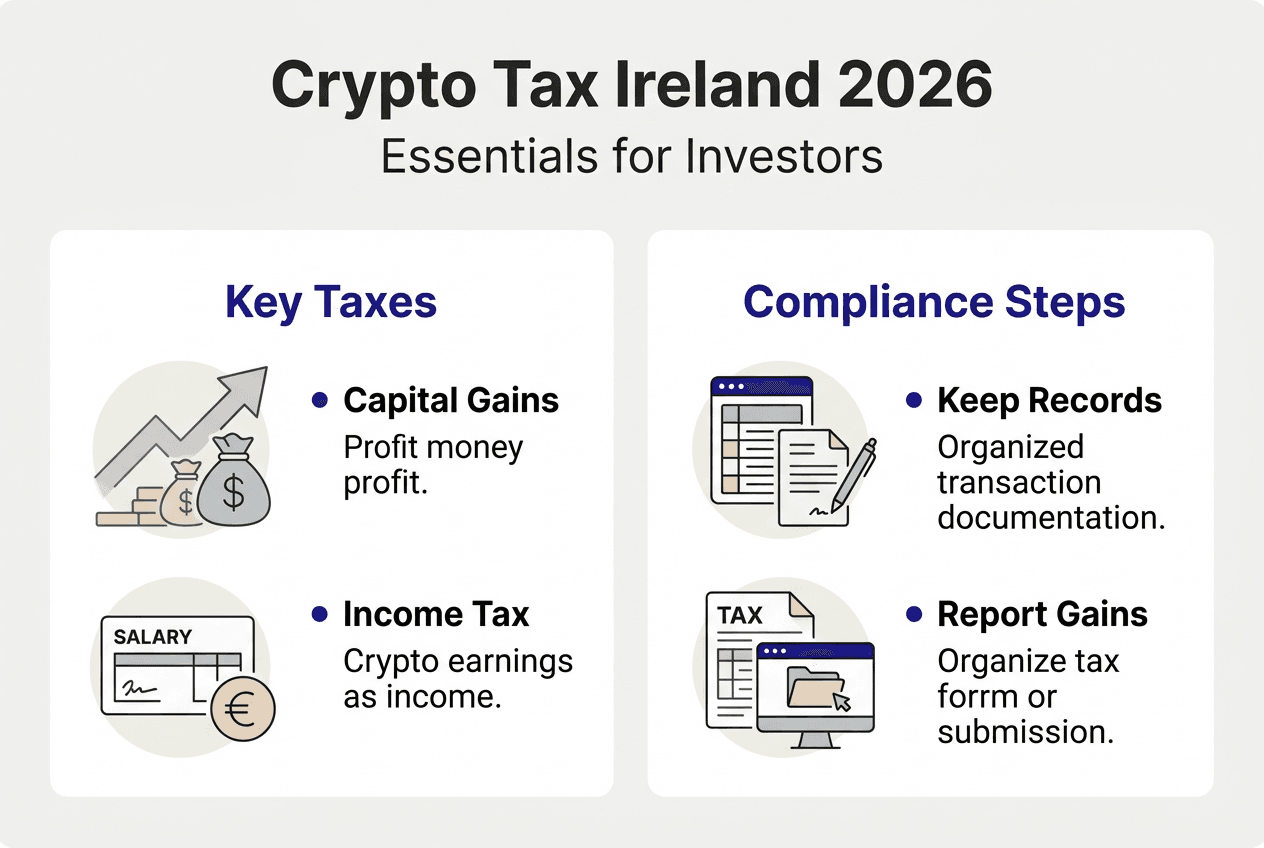
Taxable disposals include selling cryptocurrency for euros or other fiat currencies, the most obvious trigger. Swapping one cryptocurrency for another constitutes a disposal even without converting to fiat, calculated using euro market values at transaction time. Gifting crypto to anyone except your spouse creates taxable events for both parties. Purchasing goods or services with cryptocurrency triggers disposal at the euro value of items received. Mining rewards and staking income face immediate taxation as ordinary income when received, separate from later capital gains on disposal.
Filing deadlines and required forms demand strict attention to avoid penalties. Revenue imposes specific submission and payment schedules:
- Submit Form 11 self-assessment return by October 31 annually, reporting all income including crypto disposals and rewards
- Pay capital gains tax by January 31 for disposals occurring in the prior calendar year’s final months
- File Form CG1 capital gains tax return by October 31, detailing each disposal with acquisition cost, sale proceeds, and calculated gains
Allowable expenses reduce taxable gains when properly documented. Deductible costs include:
- Original purchase price of cryptocurrency disposed, including any acquisition fees
- Transaction fees paid to exchanges or networks for buying, selling, or transferring assets
- Professional fees for tax advice, accounting services, or legal counsel related to crypto investments
- Enhancement expenditure improving asset value, though rarely applicable to fungible cryptocurrencies
Pro Tip: Maintain detailed transaction records including dates, amounts, counterparties, and purposes for every crypto activity to substantiate tax calculations and deductions during Revenue audits.
Income tax treatment applies when crypto represents payment for services or business activities. If you receive cryptocurrency as employment compensation, freelance payment, or business revenue, it faces income tax at your marginal rate plus Universal Social Charge and PRSI contributions. Mining and staking rewards constitute taxable income at euro market value when received, with subsequent disposal triggering separate capital gains calculations. This dual taxation catches many investors unprepared. For practical application of these rules, explore strategies in this crypto trading guide for Ireland and learn how to buy and invest in Bitcoin safely while maintaining compliance. Revenue provides official guidance on crypto tax rules worth reviewing annually for updates.
Leveraging crypto tax software and professional services
Manual crypto tax calculations overwhelm most investors given transaction volumes, multiple exchanges, and complex disposal rules. Automated tax software consolidates data from exchanges and wallets, applies Irish tax regulations, and generates ready-to-file reports saving hours of spreadsheet work. Professional services add human expertise for complex situations involving DeFi protocols, cross-chain transactions, or business crypto activities. Combining technology with professional guidance optimizes accuracy and tax efficiency.
Koinly ranks among top crypto tax software in 2026, supporting hundreds of exchanges, over 20,000 cryptocurrencies, and multiple tax jurisdictions including Ireland’s specific CGT and income rules. The platform automatically imports transactions via API connections or CSV uploads, matches buys with sells using appropriate accounting methods, calculates gains in euros, and generates Form 11 and CG1 compatible reports. Real-time portfolio tracking helps you monitor unrealized gains and plan tax-efficient disposal timing.
Benefits of automated tax software include:
- Elimination of manual calculation errors that trigger Revenue audits and penalties
- Multi-jurisdiction support for investors trading on international platforms or holding assets across countries
- Ready-to-file reports formatted for Irish tax forms, reducing accountant fees
- Multi-chain compatibility tracking assets across Bitcoin, Ethereum, and alternative blockchain networks
- Historical data retention providing audit trails and supporting amended returns
Crypto Count Ireland offers specialized professional services for Irish investors navigating complex tax situations. Their accountants understand cryptocurrency-specific challenges like DeFi yield farming taxation, NFT disposal calculations, and cross-border reporting requirements. Services include comprehensive tax planning, CG1 and Form 11 preparation, Revenue correspondence handling, and audit defense. Professional guidance proves valuable when automated software flags ambiguous transactions or you need strategic advice on loss harvesting and timing.
I struggled tracking trades across five exchanges until Koinly automated everything. The Irish tax report saved me days of work and my accountant confirmed accuracy immediately. Worth every cent for peace of mind during tax season.
Pro Tip: Combine automated tax software for transaction tracking with professional review for complex portfolios involving DeFi lending, liquidity pools, or cross-chain bridges where tax treatment remains unclear.
Integration with portfolio management platforms amplifies benefits beyond tax compliance. Platforms like CryptoCracker connect tax data with investment performance analytics, helping you identify underperforming assets, optimize rebalancing strategies, and time disposals to minimize tax impact. Real-time gain/loss tracking informs decisions about harvesting losses to offset gains or deferring sales to future tax years. Explore Crypto Count Ireland’s specialized services for professional support and review CryptoCracker’s pricing plans to find tools matching your portfolio complexity and budget.
Explore CryptoCracker’s tools for smarter crypto management
Applying the strategies covered requires ongoing portfolio monitoring, market analysis, and tax awareness that manual tracking cannot sustain. CryptoCracker streamlines these demands through integrated tools designed specifically for Irish investors seeking efficient crypto management without technical complexity. The platform combines wallet monitoring, portfolio optimization algorithms, and real-time market insights to help you make informed decisions while maintaining tax compliance.

CryptoCracker’s dashboard consolidates holdings across multiple exchanges and wallets, providing unified visibility into your complete portfolio performance. Automated rebalancing suggestions help maintain target allocations without constant manual intervention. Security alerts notify you of unusual activity or recommended wallet updates. Tax tracking features prepare you for filing deadlines with organized transaction histories. Whether you’re building your first Bitcoin position or managing a diverse multi-chain portfolio, CryptoCracker’s tools scale with your needs. Explore comprehensive cryptocurrency wallet guidance, discover how CryptoCracker optimizes portfolios, and leverage advanced crypto market analysis tools to stay ahead of market movements. Flexible pricing plans accommodate investors at every experience level, from beginners to active traders managing significant capital.
Frequently asked questions
What counts as a taxable crypto disposal in Ireland?
Selling cryptocurrency for euros, swapping one crypto for another, gifting to non-spouses, and purchasing goods or services with crypto all trigger taxable disposals. Simply buying crypto or moving it between your own wallets does not create tax liability. Revenue tracks these events through exchange reporting and blockchain analysis.
Can I offset my crypto losses against gains on my tax return?
Yes, capital losses from crypto disposals can offset gains in the same tax year or carry forward indefinitely to reduce future capital gains tax liability. Properly document all losing trades with transaction records and include them on Form CG1 to claim offsets. Losses cannot offset ordinary income from employment or business activities.
How do I report earnings from staking or airdrops?
Staking rewards, airdrops, and mining income constitute ordinary income taxable at your marginal rate plus USC and PRSI when received. Report these on Form 11 separate from capital gains. When you later sell these assets, calculate capital gains from the original income value to disposal proceeds.
Which crypto wallet types are safest for long-term storage?
Hardware wallets like Trezor and Ledger provide superior security for long-term holdings by keeping private keys offline and protected from internet-based attacks. Hot wallets offer convenience for active trading but expose assets to hacking risks. Serious investors use cold storage for core holdings and hot wallets only for trading capital.
When are Irish crypto tax returns and payments due?
Form 11 self-assessment returns and Form CG1 capital gains returns must be filed by October 31 each year covering the prior calendar year. Capital gains tax payments for disposals in November and December are due by January 31 of the following year. Missing these deadlines triggers penalties and interest charges from Revenue.